Most working professionals will have sat through training on data protection, listening to all the ways that you should be keeping yourself and your organisation safe.
However, those lessons do not always land, particularly the advice on creating a new, complex password for every single account you use.
While many people have (hopefully) moved away from ‘password’ or using the name of their pet, there are still ongoing concerns around the security risk posed by account fatigue.
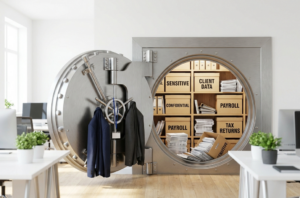
Particularly when it comes to personal tax clients, it is time for accountants to consider whether passwords can be made to meet data protection requirements.
Why are personal tax clients more at risk of account fatigue?
Account fatigue, sometimes referred to as password fatigue, is the mental stress of having too many accounts and passwords to keep track of.
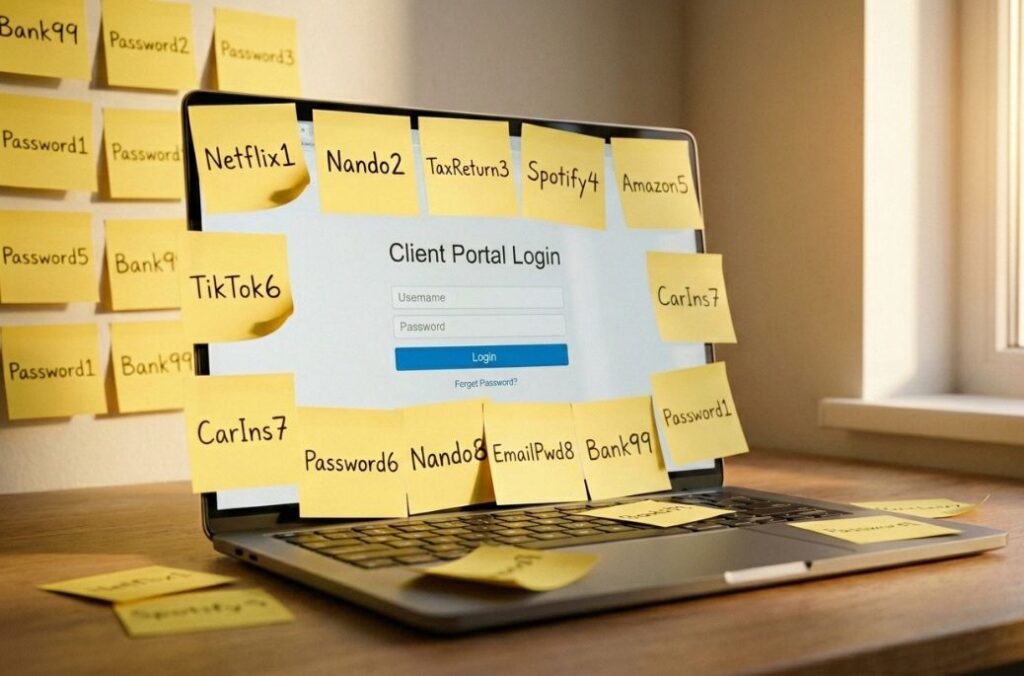
This leads to a lot of people recycling the same password across multiple accounts.
In a feat of incredible data security, some may go as far as changing the number they add on the end of a password to give the appearance that it is different.
However, even this small inclination towards security is often abandoned once the number of accounts starts piling up.
From your client’s perspective, your system’s password sits alongside the password for their email account, the password for their computer account, their phone unlock password or pin, the password for Netflix, the password for online shopping, the password for music streaming, the password for TikTok, the password for their car insurance account, the password for their Nando’s account and any number of other things that ask them to sign in.
Some experts estimate that the average person may have over 100 online accounts and the expectation would be for them to have unique passwords for each.
Account fatigue seems a perfectly natural response to this sheer volume, most of which is nigh on essential for a typical person’s daily life.
While password managers can help and are often the only way to conceivably create so many unique passwords, many individuals do not use these systems.
This is where business clients may have the security advantage, as workplace policy is more likely to mandate the use of password managers and unique, secure passwords.
Are personal tax clients a cybersecurity risk?
Yes.
There is no getting around the fact that if you require your personal tax clients, or any clients, to use a password to access your system, then they are a cybersecurity risk.
Those shared passwords can be obtained by hacking less secure systems elsewhere, creating a vulnerability in your own system.
You can send out as much messaging as you like to clients about the importance of cybersecurity, but the perceived risks of being hacked are far too distant compared to the daily annoyance of remembering 100 passwords.
The only way to ensure cybersecurity is to remove the risk posed by clients.
As passwords are a risk, they should be removed.
Rather than throwing open your system for anyone to jump on, Glasscubes provides a secure way to liaise with clients instead.
Instead of insisting that your clients create yet another password and find their way through another portal, they will receive a simple upload link.
This lets them upload their documents securely without getting confused or opening your system up to vulnerability.
Glasscubes is designed to make accounting work easier and the automated reminder emails that can be sent to clients help to achieve this goal.
No longer will you have to wait for someone to remember their password, as they simply need to click the link and get going.
Without having to devote time to coaching your clients through the use of a portal or continually reminding them to get their information to you before deadlines, your team can get back to doing the work that is important.
It may seem unthinkable to leave passwords in the past, but having that stress of a data breach reduced should help you look forward to the future.
Embrace cybersecurity with confidence by booking a demo today.